
Why I hate memes, even when I agree with them

As has been the case often lately, the world has been too much with me, bearing me down.
I’m of two minds about this. People have always struggled with the same issues we are dealing with now: justice or the lack thereof, violence, selfishness, ignorance, tribalism. Just read Dickens, or Dante or Sophocles.
And yet there are things that make it harder now. Instant knowledge of horrors across the globe. Instant yammering about those horrors, and nearly everything else. Constantly.
The talking, yelling, arguing, snarking, pontificating, extrapolating, marching, moralizing, and especially meme-izing. It all gets to be too much—what I called the “din of the world” in a recent poem.
Don’t get me started on memes—the latest excuse for people to avoid any sort of rational argument or discussion and ever taking into account the other side’s most compelling arguments or what Al Gore famously called “inconvenient facts.”
Despite what you see and hear online, or on some college campuses, many debates have two or more sides, and often both or many factions have relevant points to make, important facts to add to the picture, and perceptions to be taken into account. (Trump-ish authoritarianism is an exception, in my opinion, but many equally tangled issues are less one-sided. And even Trumpers must be, to some extent, heard and understood if we’re ever to bring them back to some sort of civil civil engagement.)
I was always taught that good lawyers, and good historians, should try to understand various arguments about key issues impartially—thinking about them seriously, trying to understand the complexities and the strong points of various competing positions. Not just the most popular ones, not just the ones they tend to believe themselves. The same for good journalists or, more to the point at this particular moment in time, college students who hope to learn and not just spout emotion and propaganda.
And, it should be added, their professors, some of whom seem to have abandoned the idea of teaching and learning altogether, in favor of doing PR for their favorite causes.
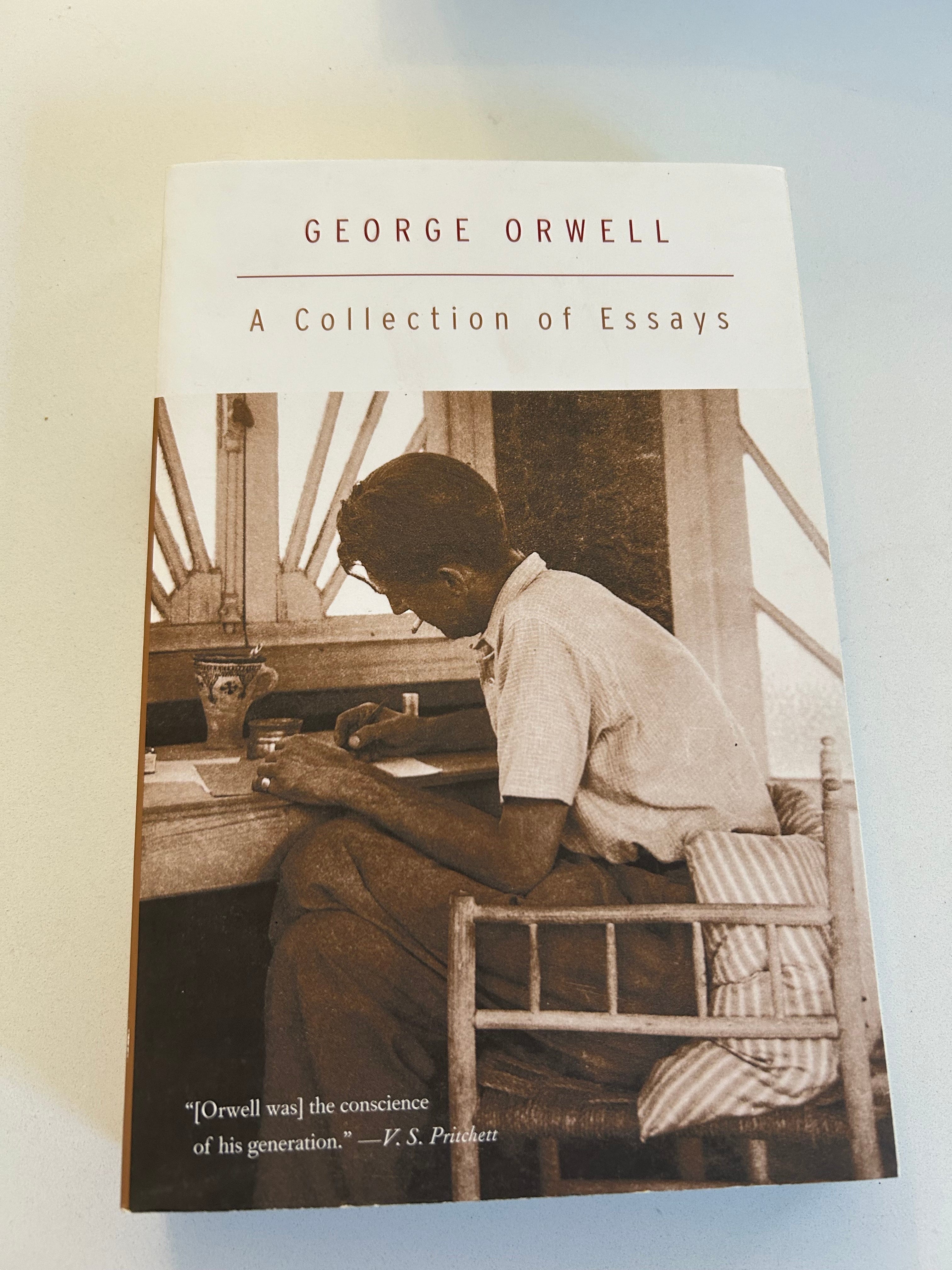
It would be wonderful to see what an observer like George Orwell would make of the current scene, which is full of the sort of ideological, propaganda-driven polemics he dismantled in “Politics and the English Language” and other works.
But alas, there are today few voices like George Orwell’s making themselves heard above the din. It doesn’t make me optimistic about the future of our education system or our democracy.
Same here, Chris. Well said.